
The REALISE Project has officially launched the registration and enrolment process for beneficiaries under the Social Cash Transfer (SCT) Component in Rivercess County. This phase targets 2,400 vulnerable households across several clans within the county, who are expected to receive six rounds of cash transfers through the end of next year.
The REALISE Project—short for Recovery of Economic Activity for Liberian Informal Sector Employment—is a government-led initiative supported by development partners, aimed at enhancing income and livelihood opportunities for vulnerable populations, particularly in informal and rural economies. The Social Cash Transfer Component is one of the project’s key pillars, designed to provide financial relief to low-income and food-insecure households, especially those affected by shocks such as economic downturns or climate-related challenges.
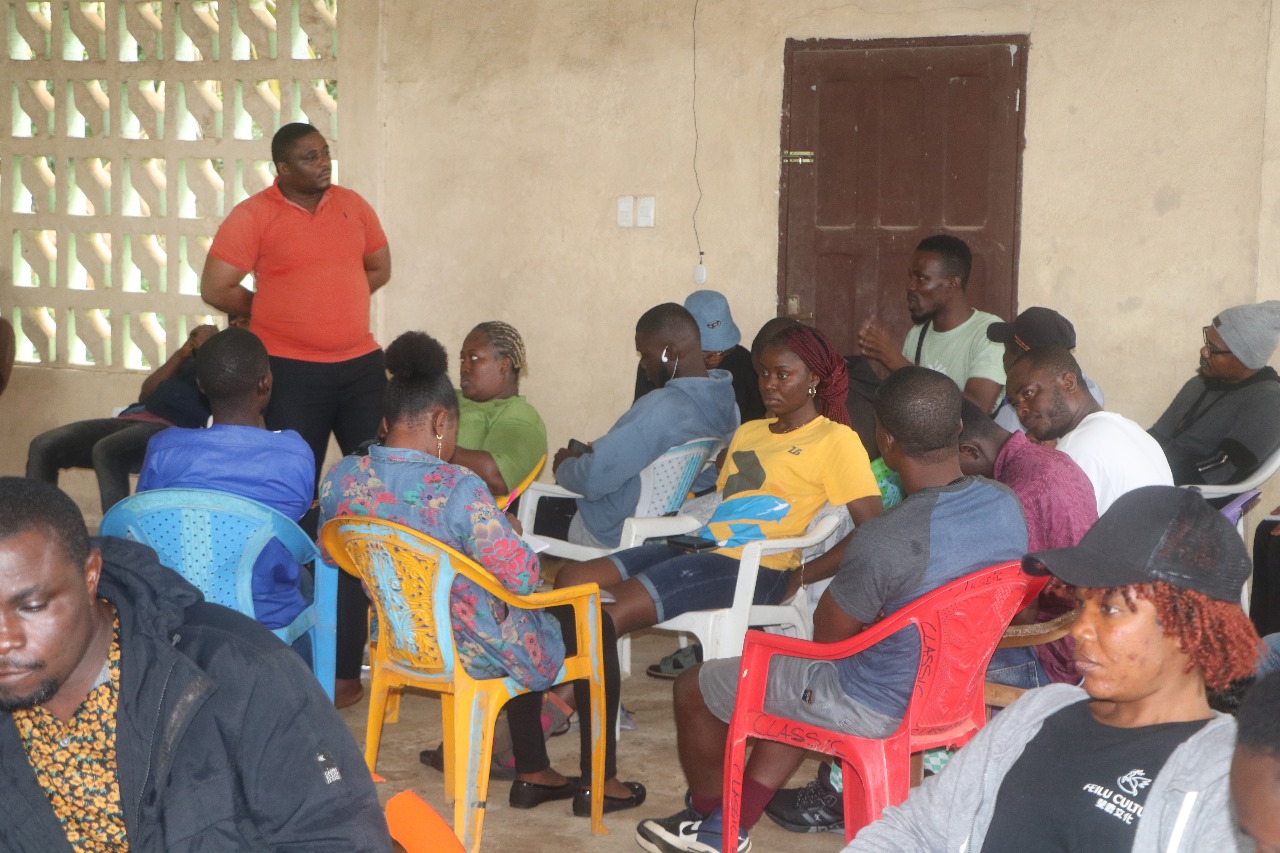
Implementation of the beneficiary targeting and registration is being carried out by the Research and Innovative Hub (RIH), a local implementing partner of the REALISE Project. RIH has mobilized a team of 50 enumerators, with the majority being recruited locally to ensure contextual knowledge and effective community engagement. These enumerators have been deployed across the designated enumeration areas in the county.
During the enumerator training session, Shadrach Gbokie, Deputy Project Manager for Social Assistance of the REALISE Project, encouraged the team to remain focused and professional throughout the process. He emphasized that the enumerators not only represent RIH, but also serve as ambassadors of the broader REALISE initiative.
“Your work is critical to ensuring that the right people are reached,” said Mr. Gbokie. “Stay committed, and remember that you represent both the REALISE Project and RIH in the communities.”
The registration and enrolment exercise is expected to be completed by early next month, paving the way for the first round of cash transfers to begin shortly thereafter.
This initiative marks a significant step toward improving household resilience and reducing extreme poverty in one of Liberia’s most under-served regions.