
Monrovia, Liberia – For most of his youth, Potee Seckeh lived a life of discipline, duty, and service. As a security personnel, he dedicated his best years to safeguarding people and property in pre-war Liberia—a career that offered him stability, purpose, and pride. But with the eruption of Liberia’s brutal civil war, everything changed, and for Potee, the life he had built began to unravel.
The war brought a wave of destruction that swept across every sector of Liberian society, including the security services. Like many others, Potee was forced to step away from his role, exchanging a structured life for one of uncertainty and survival. When the guns finally fell silent and Liberia took its first steps toward peace following the death of the country’s then-president, there was a glimmer of hope for rebuilding.
Potee believed the end of hostilities would mark a fresh start—not just for the nation, but for him personally. With decades of experience and a deep understanding of the field, he sought to return to the security sector under the new administration. However, his hopes were met with disappointment. Despite his commitment and service, his attempts at re-entry were consistently denied. The new order had no place for him.
As reality sets in, the challenge of meeting his family’s basic needs grew more pressing. Once a provider through a stable profession, Potee now found himself at a crossroads, grappling with the stark demands of survival in a post-conflict economy that was slow to heal.
“We had to make a choice,” Potee said. “Either sit and hope or find something new that would keep us going.”
With resilience forged from years of service and hardship, Mr. Seckeh and his family turned their attention to new avenues of livelihood. While the transition was neither smooth nor simple, the will to survive—and ultimately grow—propelled them forward. Whether it was through small-scale trade or local enterprise, the family began to rebuild from the ground up.
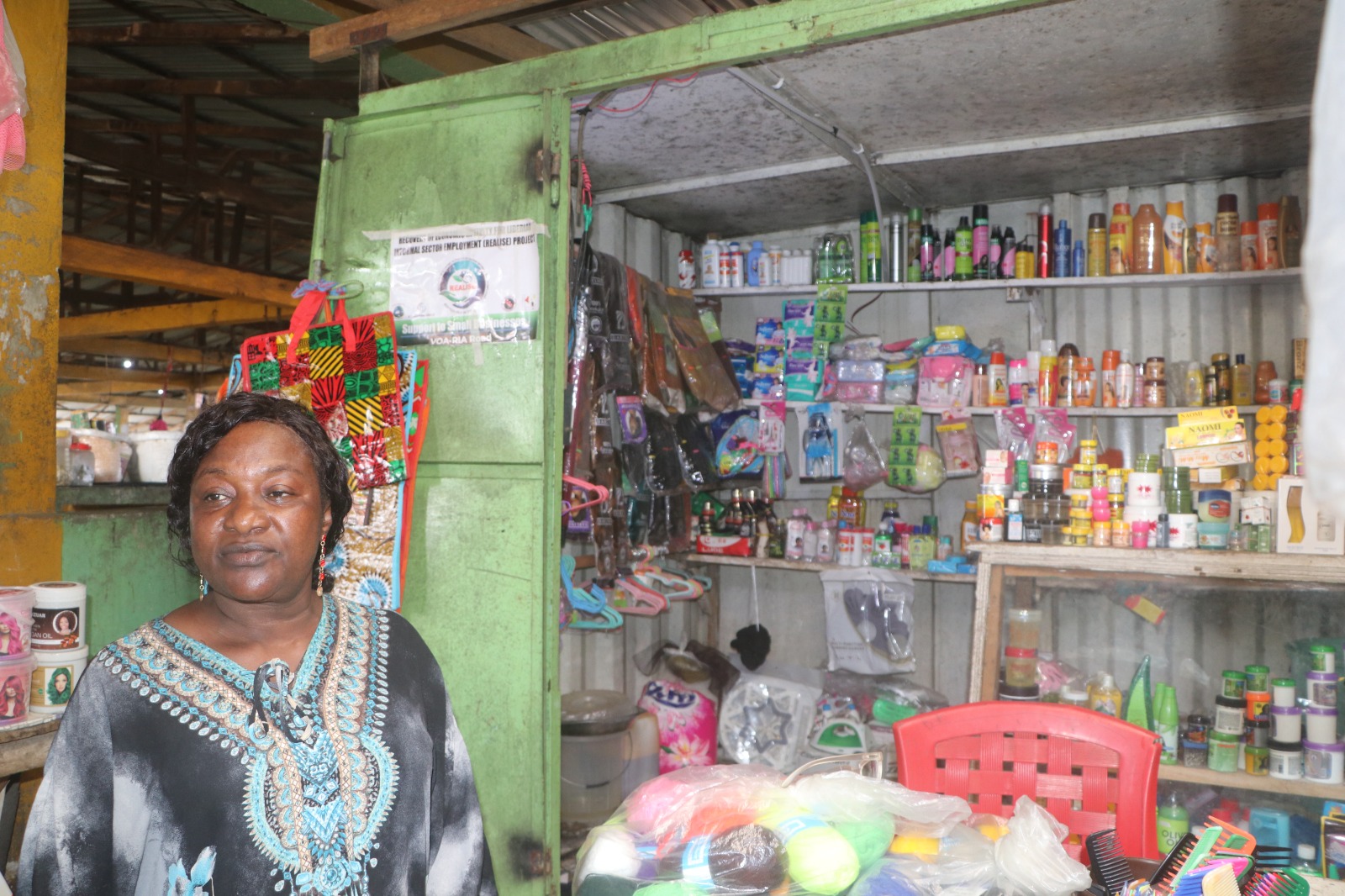
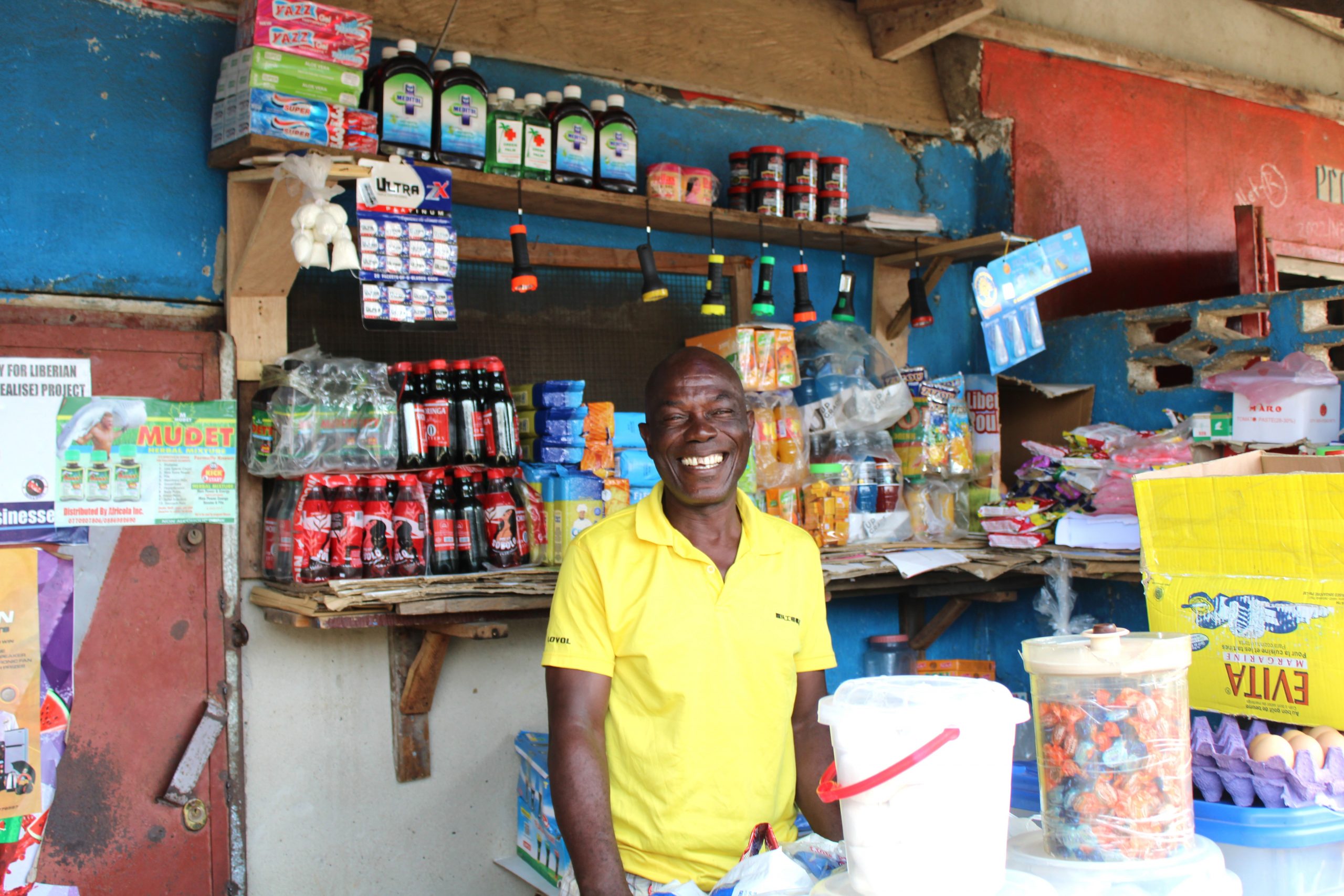
Potee launched a small provision shop from his home in the Stephen Tolbert community. He initially started the business with a modest loan from a local bank in Monrovia, determined to create a source of income for his family.
To expand his business, Potee took advantage of the recruitment process under the REALISE Project—a development initiative designed to support vulnerable families in either reviving or starting small businesses. As part of the process, he participated in a lottery process and was fortunate to be selected as a grant recipient. He received a grant of $900 USD to help grow his enterprise.
“I used to take loans from Access Bank with high interest rates,” Potee shared. “But since I received the grant from the REALISE Project, I no longer need to borrow. I invested the money directly into my business, and things have improved significantly for me and my family.”
Today, Potee’s shop is not only a reliable source of income but also a symbol of resilience and hope in a post-conflict community striving for economic recovery.
As the country continues to chart its path toward stability and development, stories like Potee Seckeh’s are a sobering reminder of the human cost of conflict—and the unyielding strength of those who choose to carry on.
The REALISE Project is financed by the World Bank, Swedish government, French government, and the government of Liberia. Implemented by the Ministries of Youth Sports, Gender, Children and Social Protection, the Liberia Agency for Community Empowerment.